CGO Media Research
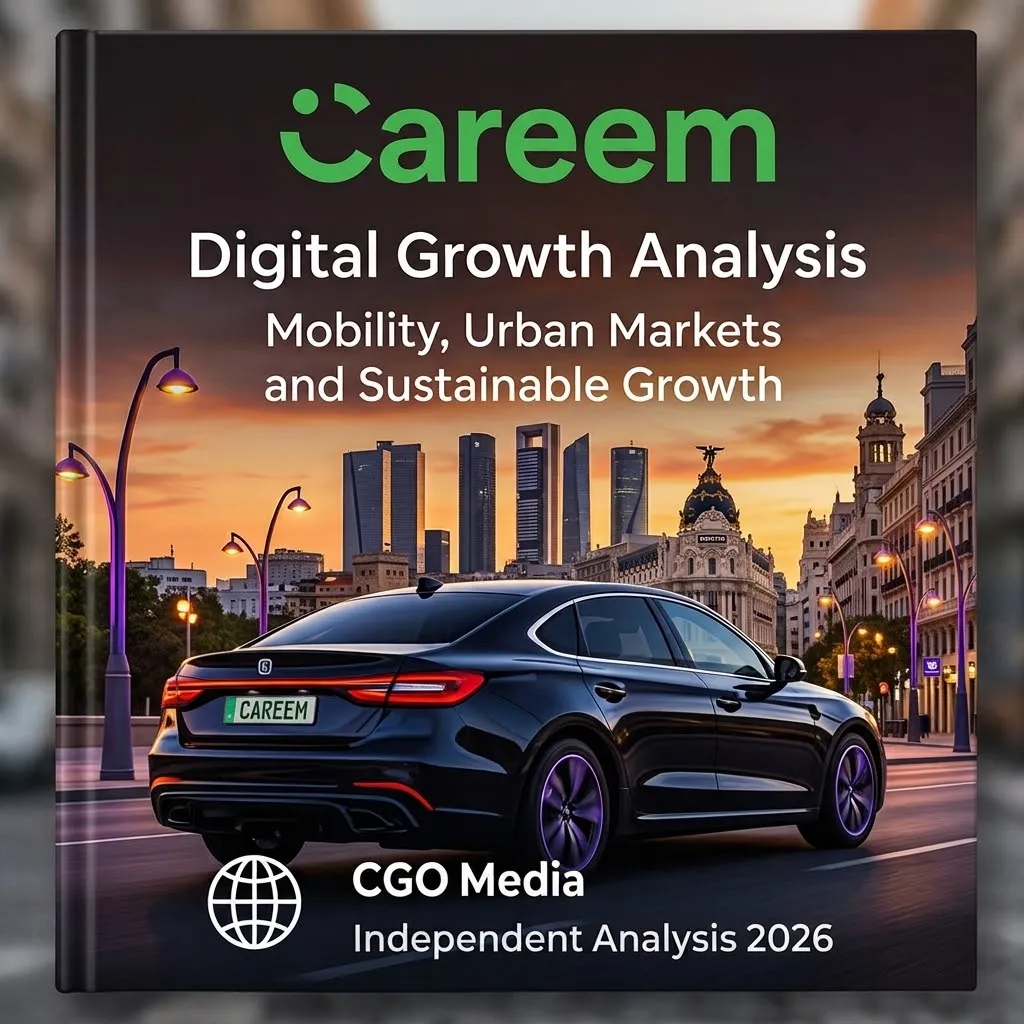
How Super-App Architecture, Local Services and Customer Data Built a Middle Eastern Technology Ecosystem
An independent analysis of how Careem expanded from ride-hailing into a multi-service digital platform connecting transport, food, groceries, payments, business ordering, subscriptions and local services across the Greater Middle East.
Growth Analysis Overview
- Company: Careem
- Founded: 2012
- Origins: Dubai, United Arab Emirates
- Primary region: The Greater Middle East
- Industry: Mobility, delivery, payments and digital marketplaces
- Original service: App-based ride booking
- Current positioning: A regional everything app combining everyday digital services
- Primary digital disciplines: App growth, local SEO, marketplace development, service architecture, personalisation, subscriptions, fintech, content and AI-search readiness
- Case-study type: Independent analysis based on publicly available information
- Relationship disclosure: Careem is not presented as a CGO Media client
Introduction
Careem is one of the most significant technology companies to emerge from the Middle East.
Founded in Dubai in 2012, the business originally focused on solving a regional transportation problem through a mobile ride-booking platform.
Customers could use the application to request a vehicle, identify the assigned driver, follow the journey and make payment through a digital interface.
Careem referred to its drivers as Captains, helping develop terminology and a brand identity adapted to the markets in which it operated.
The company expanded rapidly across cities in the Middle East, North Africa and South Asia before being acquired by Uber in a transaction valued at approximately $3.1 billion.
Careem subsequently developed beyond ride-hailing.
Its wider digital platform has included services such as:
- Passenger rides
- Taxi booking
- Food delivery
- Rapid grocery delivery
- Digital payments
- Local and international money transfers
- Bill payments
- Bicycle rental
- Courier and delivery services
- Corporate ordering
- Home and personal services through selected partners
- Subscription benefits through Careem Plus
This evolution transformed Careem from a single-purpose mobility application into what the company describes as an everything app.
The objective is to place numerous everyday services within one account, one interface and one broader customer ecosystem.
This makes Careem an important digital-growth case study.
Its strategy demonstrates how a company can use an established customer base, trusted payment relationships, local operational knowledge and platform technology to expand into adjacent categories.
The Original Regional Mobility Problem
Urban transportation across the Middle East has historically varied considerably between cities.
Passengers could encounter challenges including:
- Uncertain vehicle availability
- Difficulty communicating collection points
- Inconsistent payment methods
- Limited visibility over driver arrival
- Difficulty obtaining business receipts
- Inconsistent pricing expectations
- Limited digital customer support
Careem used mobile technology, mapping and digital payments to reduce this friction.
A passenger could enter a collection point and destination, choose an available vehicle category and track the assigned Captain through the application.
The platform created a digital record of the journey and could support card payments, account credit, customer feedback and support.
This made urban transport more measurable and manageable for both individual passengers and companies.
Why Careem Is an Important Digital Growth Analysis
Careem illustrates several important principles of platform growth.
First, it solved a frequent and clearly understood customer problem.
People needed to travel around their cities repeatedly. This created high potential usage frequency compared with services purchased only occasionally.
Second, the company built a two-sided marketplace.
Passengers needed available Captains, while Captains needed sufficient passenger demand.
Third, Careem established:
- Customer accounts
- Saved payment methods
- Location data
- Operational infrastructure
- Local brand recognition
- Customer-support systems
- Repeat application usage
These assets could later support additional services.
A customer already using Careem for transport did not necessarily need to create another account or learn a completely different interface to order food, groceries or make selected payments.
This reduced the friction associated with entering new categories.
From Ride-Hailing to the Everything App
Careem’s super-app strategy is based on placing multiple everyday services within one digital environment.
The transition can be understood as a progression through related customer needs.
Mobility
The original platform helped customers move around their cities.
Delivery
The same location, logistics and payment capabilities could help move food, groceries and packages.
Payments
Customers already making digital payments through Careem could be introduced to stored credit, bill payment and money-transfer services.
Subscriptions
Benefits across multiple categories could be combined into one recurring membership.
Partner Services
Third-party providers could use Careem’s interface and customer access to offer additional everyday services.
The strategic model becomes:
One customer account → multiple services → higher usage frequency → more customer data → stronger retention.
Super-App Architecture
A super app differs from a collection of unrelated applications.
The customer expects the services to feel like parts of one coherent platform.
Shared elements can include:
- One customer identity
- Saved addresses
- Saved payment methods
- Account credit
- Subscription status
- Customer support
- Promotional rewards
- Personalised recommendations
Careem must still preserve clarity.
A customer opening the app to request a ride should not be forced through an unnecessarily complicated catalogue of unrelated services.
The interface needs to provide broad choice while allowing users to reach their intended service quickly.
Super-app design is therefore a problem of prioritisation as much as expansion.
Local Marketplace Effects
Careem’s services depend on local marketplace supply.
A service can be nationally recognised but still perform poorly when local availability is insufficient.
Each service requires its own supply network.
- Rides require Captains and vehicles.
- Food delivery requires restaurants and delivery capacity.
- Groceries require stock, fulfilment locations and couriers.
- Bike rental requires stations, bicycles and city infrastructure.
- Payments require regulated financial infrastructure and participating partners.
This creates several connected marketplace cycles.
For rides:
More Captains → better availability → more passengers → more trips → stronger earning opportunities.
For food:
More restaurants → more customer choice → more orders → greater merchant value → more restaurants.
Growth therefore needs to be evaluated at city and service level rather than through one regional user figure alone.
Local SEO and City-Level Discovery
Careem’s services are highly location dependent.
Customers may search for:
- Careem Dubai
- Taxi app Dubai
- Food delivery Abu Dhabi
- Grocery delivery in Dubai
- Careem Bike locations
- Airport ride Dubai
- Send money from UAE
- Careem services in Sharjah
These searches represent different service and location combinations.
An effective local architecture should help users understand:
- Whether Careem operates in the location
- Which services are available
- Which ride categories can be booked
- Whether food or grocery delivery is supported
- Whether payment products are available
- Which terms or restrictions apply
Local pages must be based on current operational reality.
A page should not imply that every Careem service is available in every city.
Country and Service Localisation
Careem operates in a region containing different languages, currencies, transport systems and regulations.
Markets may differ in:
- Available services
- Vehicle categories
- Taxi integration
- Payment regulations
- Money-transfer options
- Food-delivery coverage
- Captain requirements
- Customer-support processes
- Local terminology
Effective international SEO therefore requires market-specific content.
A generic page describing the entire Careem ecosystem may create confusion when a service is restricted to selected countries or cities.
Country versions should communicate:
- Local service availability
- Regional currency
- Relevant legal terms
- Local support
- Market-specific promotions
- Applicable payment options
The Relationship Between Website and App
Careem is fundamentally app-led, but its public website remains commercially important.
The website can help users:
- Discover Careem through search engines
- Understand available services
- Review subscription benefits
- Learn about Careem Pay
- Access business services
- Register as a Captain or partner
- Read company information
- Access legal and support material
- Download the application
A common journey may become:
Search engine → service page → app installation → registration → first transaction → repeated multi-service usage.
Careem should therefore measure more than website clicks.
Important website-assisted outcomes include:
- App installations
- Account creation
- First ride
- First food order
- First grocery order
- Careem Plus subscription
- Careem Pay activation
- Business enquiry
Ride-Hailing as the Core Acquisition Product
Rides remain an important entry point into the Careem ecosystem.
Customers may use Careem when they need:
- Daily city transport
- Airport transfers
- Business travel
- Family transport
- Taxi booking
- Premium vehicles
- Scheduled journeys
Ride landing pages should communicate:
- Available locations
- Vehicle categories
- Booking process
- Payment options
- Safety features
- Airport availability
- Captain information
Pricing information needs careful presentation because final charges may depend on location, route, timing, service category and operational conditions.
The website should explain the pricing mechanism without implying that one fixed rate applies universally.
Captain Acquisition and Supply Growth
Passenger demand has limited value when insufficient Captains are available.
Potential Captains may search for:
- Drive with Careem
- Careem Captain requirements
- Careem driver registration
- Taxi jobs in Dubai
- Delivery work with Careem
- Careem Captain earnings
Captain-acquisition content should explain:
- Who can register
- Required documentation
- Vehicle requirements
- Local regulatory conditions
- How the Captain app works
- How payments are received
- Which services are available
- Where support can be accessed
Requirements must be localised because transport and employment rules vary between countries and cities.
Food Delivery and Merchant Discovery
Careem Food extends the platform from moving people to moving restaurant orders.
Customers may search by:
- Restaurant name
- Cuisine
- Dish
- Location
- Delivery time
- Promotion
Relevant search journeys may include:
- Food delivery Dubai
- Restaurants delivering near me
- Pizza delivery Abu Dhabi
- Healthy food delivery Dubai
- Careem Food offers
Food-delivery pages need current information about:
- Merchant availability
- Opening hours
- Menus
- Prices
- Delivery zones
- Promotions
Dynamic merchant information creates a significant freshness challenge.
Permanently closed restaurants, expired offers and outdated menus should not remain presented as current options.
Merchant Acquisition
Careem’s delivery ecosystem depends on restaurants and other commercial partners joining the platform.
Potential partners may search for:
- Sell food through Careem
- Register restaurant on Careem
- Food-delivery platform for restaurants
- Careem partner portal
- How to increase restaurant delivery orders
Merchant pages should explain:
- Registration
- Required business information
- Menu management
- Order handling
- Delivery options
- Payment settlement
- Marketing support
- Partner assistance
Careem’s partner portal helps participating businesses manage access to the wider delivery ecosystem.
Deeper merchant tools strengthen Careem’s position as operating infrastructure rather than merely another advertising channel.
Careem Quik and Rapid Grocery Delivery
Careem Quik addresses frequent and often urgent grocery needs.
Customers may use the service for:
- Milk and household essentials
- Fruit and vegetables
- Snacks and drinks
- Personal-care products
- Cleaning products
- Last-minute school or household items
Rapid grocery delivery creates a different operational model from restaurant delivery.
Careem needs control over:
- Inventory accuracy
- Product categorisation
- Fulfilment locations
- Picking speed
- Substitutions
- Delivery times
- Product freshness
Careem has promoted Quik in Dubai and Abu Dhabi as a rapid-delivery service with a catalogue extending across thousands of everyday products.
The larger the product catalogue becomes, the more important structured product data and inventory management become.
Careem Pay and the Payments Ecosystem
Careem Pay extends the platform into digital financial services.
Available functions can include:
- Stored account credit
- Payment for Careem services
- Local money transfers
- International remittances
- Bill payment
- Mobile top-ups
- Bank withdrawals where supported
Payments can strengthen the super-app ecosystem because customers already need to pay for rides, food and groceries.
A trusted wallet or payment function can reduce transaction friction across multiple categories.
The commercial cycle becomes:
More services → more payment occasions → greater wallet utility → stronger customer retention.
Financial services also create greater regulatory and trust responsibilities.
Careem Pay information must be:
- Accurate
- Market specific
- Secure
- Transparent about fees
- Clear about transfer limits
- Aligned with financial regulations
International Money Transfers
The Gulf contains a large international workforce whose members regularly send money to family and personal accounts in other countries.
International transfers can therefore solve a frequent regional customer need.
Relevant search demand may include:
- Send money from UAE
- International money transfer app
- Send money to India from Dubai
- Remittance app UAE
- Transfer money overseas
A strong transfer page should explain:
- Supported destination countries
- Transfer fees
- Exchange rates
- Estimated delivery time
- Eligibility
- Identity verification
- Transaction limits
Financial content should never imply that all routes, currencies or transfer benefits are universally available.
Careem Plus and Subscription-Led Retention
Careem Plus combines benefits across several services within one monthly subscription.
Depending on current market terms, benefits may extend across:
- Rides
- Food delivery
- Groceries
- Careem Bike
- Dining
- Selected partner services
- Customer support
- Payment or transfer benefits
This model is strategically powerful because it encourages customers to use several services rather than only one.
A customer subscribing for food-delivery savings may also begin using rides or grocery delivery more frequently.
The subscription can support:
- Higher transaction frequency
- Cross-service adoption
- Lower customer churn
- Predictable recurring revenue
- Stronger first-party data
- Reduced reliance on promotional discounts
Careem reported substantial aggregate savings for Plus members across its services, illustrating how the company communicates the programme through measurable customer value.
Careem for Business
Careem for Business extends the platform into corporate ordering and expense management.
Companies may use the service to manage:
- Employee rides
- Corporate food orders
- Grocery purchases
- Courier deliveries
- Centralised billing
- Employee permissions
- Account reporting
- Business spending
This creates high-value B2B search opportunities such as:
- Corporate transport UAE
- Employee ride account
- Business food-ordering platform
- Corporate courier service Dubai
- Business expense transport app
Corporate relationships can be more valuable and predictable than isolated consumer transactions.
They also increase the number of situations in which customers interact with the Careem ecosystem.
Careem Bike and Urban Micromobility
Careem Bike adds a micromobility layer to the wider transport platform.
Bicycle-sharing services can support:
- Short urban journeys
- First-mile and last-mile transport
- Leisure cycling
- Tourism
- Fitness
- Lower-emission mobility
The service depends on physical city infrastructure.
Important information includes:
- Station locations
- Bike availability
- Pricing
- Membership
- Operating areas
- Safety guidance
Careem has worked with public transport authorities and city initiatives, helping position the platform within the wider urban-mobility ecosystem.
Company reporting on Careem Bike has also highlighted millions of kilometres travelled and estimated transport-emissions displacement.
Express and Business Delivery
Careem Express provides delivery support for businesses requiring local courier and last-mile services.
Potential use cases include:
- Retail deliveries
- Document transport
- Customer orders
- Local ecommerce fulfilment
- On-demand courier services
The service extends Careem’s logistics network beyond consumer food and grocery orders.
Business delivery pages should explain:
- Supported cities
- Delivery speed
- Real-time tracking
- Merchant integration
- Customer support
- Pricing arrangements
Careem has stated that Express operates across multiple regional cities, demonstrating the reuse of its logistics capabilities for wider commercial needs.
Cross-Service Personalisation
A super app can understand customer behaviour across several categories.
Careem may observe patterns involving:
- Frequently used ride locations
- Favourite restaurants
- Regular grocery products
- Preferred payment methods
- Time-of-day behaviour
- Subscription usage
- Repeat business orders
This information can support:
- Relevant recommendations
- Faster repeat ordering
- Personalised home-screen organisation
- Service reminders
- Targeted promotions
- Customer-retention campaigns
Careem Moments demonstrates one way of transforming multi-service usage into a personalised annual customer experience.
Personalisation must still respect privacy, consent and the reasonable expectations of users.
A platform should not use sensitive location or financial behaviour in ways customers would find intrusive or difficult to understand.
Brand Architecture
A multi-service platform needs a clear brand system.
Individual services need to remain recognisable while benefiting from the Careem master brand.
Examples include:
- Careem Rides
- Careem Food
- Careem Quik
- Careem Pay
- Careem Bike
- Careem Plus
- Careem for Business
- Careem Express
Clear naming helps users and search systems understand the relationship between the parent platform and each service.
Without strong brand architecture, the platform risks appearing as a confusing collection of unrelated products.
Careem’s published brand guidance distinguishes between products living within the super app and external or independent initiatives.
Content Authority and the Careem Story
Careem publishes content across corporate, newsroom, engineering and community channels.
Relevant content themes include:
- Product launches
- City expansion
- Engineering systems
- Customer behaviour
- Captain initiatives
- Community support
- Regional technology development
- Sustainability
- Partner services
Engineering content can strengthen Careem’s authority as a technology company rather than only a consumer application.
It can attract:
- Technical talent
- Developer citations
- Industry backlinks
- Academic interest
- Technology-media coverage
Company history and product-launch content also help search and AI systems understand Careem’s evolution.
Community and Social Impact
Careem’s name is associated with generosity, and the company has used its platform to support charitable and community initiatives.
Digital mechanisms can help customers contribute through:
- Donations
- Rewards
- Campaign participation
- Emergency support
- Food-assistance initiatives
A large consumer platform can create significant participation by making contribution options easy to access within an application customers already use.
Social-impact claims should be supported by clear reporting about:
- Participating organisations
- Funds collected
- Beneficiaries
- Campaign periods
- Platform contributions
Technical SEO Challenges
Careem’s public digital ecosystem contains multiple country, city, service and support environments.
Important technical SEO challenges include:
- Country and language duplication
- Changing service availability
- City-level landing pages
- Separate help-centre content
- App-store relationships
- JavaScript rendering
- Canonicalisation
- Hreflang
- Redirect management
- Content freshness
- Mobile performance
- Structured data
The company must distinguish between:
- Permanent public service pages
- Country-specific pages
- Temporary app states
- Customer-account information
- Transaction-specific pages
- Historical product announcements
Private customer transactions and temporary in-app states should not become indexable public URLs.
Search engines should primarily discover stable service, market, business, support and company-information pages.
International SEO and Hreflang
Careem operates across markets sharing some linguistic and cultural characteristics but differing operationally.
Important international signals include:
- Country-specific URLs
- English and Arabic language versions
- Hreflang annotations
- Regional canonical tags
- Market-specific metadata
- Local internal links
- Country-level service definitions
Incorrect international signals can cause:
- The wrong market version to rank
- Users to encounter unavailable services
- Incorrect currency or payment information
- Regional pages to compete with one another
- Local pages to be treated as duplicates
The international architecture must reflect actual business operations rather than only translation.
Structured Data and Service Entities
Careem’s ecosystem contains numerous identifiable entities and relationships.
These include:
- The Careem organisation
- Countries
- Cities
- Rides
- Captains
- Restaurants
- Grocery products
- Payment services
- Subscription plans
- Business services
- Mobile applications
Search and AI systems should be able to understand:
- Which services belong to Careem
- Where each service operates
- Which app provides access
- Which subscription benefits apply
- Which business products are available
- Which payment services are market specific
Useful structured signals may include:
- Organisation information
- Software application data
- Local service information
- Product and offer data
- Article markup
- Breadcrumbs
- FAQ information where appropriate
AI Search and Conversational Service Discovery
Careem’s service ecosystem is particularly suited to conversational discovery.
Users may ask:
- What services does Careem offer in Dubai?
- Can I send money internationally through Careem?
- Which food-delivery app includes grocery and ride benefits?
- How can my company manage employee rides and food orders?
- Where can I rent a Careem Bike?
- Does Careem operate in Sharjah?
- What benefits are included with Careem Plus?
Answering these questions requires current information about:
- Customer location
- Service availability
- Subscription terms
- Payment eligibility
- Business products
- Operating hours
- Current promotions
Careem can strengthen AI discovery by making service information clearly structured and market specific.
The greatest risk is that an AI system combines information from different markets and incorrectly suggests that a service available in the UAE is also available everywhere else.
Generative Engine Optimisation Opportunities
Generative Engine Optimisation helps AI platforms understand, trust and reference official company information.
Opportunities for Careem include:
- Consistent service naming
- Clearly defined market availability
- Structured city relationships
- Accurate subscription terms
- Current payment-service information
- Machine-readable app details
- Authoritative safety guidance
- Transparent company history
- Strong external citations
AI systems should distinguish between:
- Careem’s current services
- Historical services
- Careem Rides
- The wider everything app
- Partner-provided services
- Country-specific payment products
- Current and expired subscription benefits
These distinctions reduce the risk of inaccurate service recommendations.
AI Within the Product Experience
Artificial intelligence can also improve the operation of a multi-service application.
Potential uses include:
- Predicting ride demand
- Improving vehicle allocation
- Estimating delivery times
- Personalising service recommendations
- Detecting payment fraud
- Improving customer support
- Optimising grocery inventory
- Identifying suspicious transactions
- Improving delivery routes
AI should support reliability and customer value rather than creating unexplained decisions.
High-impact decisions involving payments, account restrictions, Captain access or fraud prevention require appropriate governance and review.
Brand Authority in the Greater Middle East
Careem has developed strong recognition across the regional technology market.
Brand authority can generate:
- Direct app usage
- Branded searches
- Repeat transactions
- Merchant participation
- Captain registrations
- Business enquiries
- Media citations
- Technology-industry recognition
The company’s regional identity is an important competitive advantage.
Careem developed products around local transportation, payment, language and customer-service realities rather than simply applying an unchanged international model.
That local understanding helped the brand become associated with regional technology innovation.
What Careem Did Well
Solved a Frequent Regional Problem
Careem began with an everyday mobility need capable of generating regular customer usage.
Built Strong Local Marketplace Effects
Passenger demand attracted Captains, while greater Captain supply improved the passenger experience.
Created a Recognisable Regional Brand
Careem adapted terminology, communication and operations to the markets it served.
Expanded Through Related Customer Needs
Mobility, delivery and payments share location, logistics, identity and transaction infrastructure.
Developed a Multi-Service Subscription
Careem Plus encourages customers to use several parts of the platform more frequently.
Built a Financial-Services Layer
Careem Pay extends the customer relationship beyond payment for rides and deliveries.
Created Consumer and Business Products
Careem for Business and Express provide additional commercial opportunities beyond individual consumer transactions.
Used Technology Content to Strengthen Employer and Engineering Authority
Engineering publications demonstrate the complexity and scale behind the consumer application.
Challenges and Risks
Super-App Complexity
Adding more services can make the application difficult to navigate and weaken the clarity of the original proposition.
Uneven Service Availability
Customers may assume that every service operates in every Careem market.
Marketplace Supply
Rides, food and delivery services all depend on sufficient local supply.
Regulatory Complexity
Transport, payments, money transfers, employment and delivery rules vary by country.
Financial Trust
Payment and remittance services require strong security, transparent fees and regulatory compliance.
Merchant and Partner Quality
Customers may attribute restaurant, grocery, courier and third-party service failures to Careem.
Data Privacy
A super app can collect extensive information about location, purchases, travel and payments.
Cross-Service Reputation
A poor experience in one category can reduce trust in the wider Careem platform.
AI Accuracy
AI-generated answers may combine outdated or market-specific service information incorrectly.
Intense Platform Competition
Careem competes with specialist mobility, food-delivery, grocery, fintech and business-service applications.
How CGO Media Would Approach a Similar Super App
A CGO Media strategy for a multi-service digital platform would connect technical SEO, service architecture, local discovery, app conversion, brand authority and AI-search readiness.
Phase 1: Service and Market Diagnosis
The initial analysis would examine:
- Search demand by country and city
- Search demand by service
- Branded and non-branded traffic
- Website-to-app conversion
- First-service activation
- Cross-service adoption
- Subscription conversion
- Customer retention
Phase 2: Service Architecture
The website would clearly separate and connect:
- Rides
- Food
- Groceries
- Payments
- Bike
- Business ordering
- Courier services
- Subscriptions
Phase 3: International and Local SEO
Country and city pages would be reviewed for:
- Actual service availability
- Local terminology
- Currency
- Legal terms
- Hreflang
- Canonicalisation
- Internal linking
- Content freshness
Phase 4: Technical SEO Audit
CGO Media would evaluate:
- Crawlability
- Indexation
- JavaScript rendering
- Country duplication
- Help-centre overlap
- Redirects
- Mobile performance
- Structured data
- App links
- XML sitemaps
Phase 5: Website-to-App Conversion
Landing pages would be measured against:
- Application installations
- Account creation
- First transaction
- Second-service adoption
- Subscription activation
Phase 6: Marketplace Supply Acquisition
Dedicated journeys would support:
- Captains
- Restaurants
- Retail merchants
- Delivery partners
- Corporate customers
Phase 7: Content Authority
Content clusters could include:
- Urban mobility
- Regional payments
- Food-delivery trends
- Quick commerce
- Business logistics
- Micromobility
- Regional technology
- Platform engineering
Phase 8: Digital PR
Aggregated platform data could support research into:
- Urban journey patterns
- Popular food categories
- Grocery-demand trends
- Remittance behaviour
- Business-ordering patterns
- Micromobility usage
- City-level digital adoption
Phase 9: AI and GEO Readiness
CGO Media would test how Careem-style services appear across generative-search platforms.
Improvements would focus on:
- Service definitions
- City availability
- Country-specific financial products
- Subscription terms
- Partner relationships
- App information
- Content update dates
- Entity consistency
Phase 10: Commercial Measurement
Reporting would connect organic visibility to:
- New customers
- First transactions
- Ride frequency
- Food and grocery orders
- Payment activation
- Careem Plus subscriptions
- Cross-service usage
- Business accounts
- Customer lifetime value
Key Lessons for Dubai and International Businesses
- Begin with a frequent and clearly understood problem.
Careem used everyday transportation to establish regular customer behaviour. - Local marketplace liquidity matters more than regional awareness alone.
Every city requires sufficient passengers, Captains, merchants and delivery capacity. - Adjacent services should reuse genuine platform strengths.
Careem expanded through services sharing location, logistics, payment and customer-account infrastructure. - A super app still needs clear service architecture.
Customers should be able to reach the service they need without unnecessary complexity. - App businesses still need public websites.
Search pages create discovery, explanation, trust and app-installation opportunities. - Subscriptions can connect separate services.
Careem Plus encourages customers to use more of the ecosystem. - Payments deepen the customer relationship.
A digital wallet creates utility beyond individual rides or delivery orders. - Market localisation must reflect operations.
Services, regulations, currencies and benefits differ across countries and cities. - First-party data creates personalisation opportunities and responsibilities.
Customer information must be used transparently and securely. - AI discovery requires precise market-level information.
Service recommendations are useful only when availability, pricing and eligibility remain current.
Conclusion
Careem demonstrates how a Dubai technology company can develop from a specialised mobility service into a broad regional digital ecosystem.
Its growth is not based only on placing more icons within one application.
It is supported by the interaction of:
- Local mobility demand
- Captain supply
- Customer accounts
- Saved payment relationships
- Food and grocery delivery
- Careem Pay
- Careem Plus
- Corporate ordering
- Micromobility
- Regional brand authority
The super-app strategy works when additional services reduce customer friction and share genuine infrastructure.
It becomes weaker when expansion creates confusion, inconsistent availability or poor service quality.
Careem’s central digital challenge is therefore not simply adding new products.
It is making multiple services feel reliable, useful and connected within each local market.
For CGO Media, the central lesson is:
The strongest super apps do not merely place many services inside one interface. They connect identity, location, payments, logistics, subscriptions and local supply into one coherent customer ecosystem.
When local marketplace growth, technical architecture, customer data, brand trust and AI-ready information reinforce one another, digital visibility becomes a scalable commercial asset.
Build a Stronger Multi-Service Digital Ecosystem
CGO Media helps technology platforms, marketplaces and international app businesses improve technical performance, local visibility, service architecture and AI-search readiness.
Explore
Enterprise SEO UK,
learn more about
Technical SEO UK
or discover how
GEO Services UK
can support complex multi-service platforms.
Research Sources